Every spring we get calls from homeowners whose lawn looks worse in May than it did in April. Almost always the work was done properly, but too early, or in the wrong order.
Grass coming out of dormancy is fragile. Its crowns sit right at the soil surface, the ground underneath is saturated, and the root system has not started growing yet. Walk on it, rake it hard, or feed it in that window and you set it back weeks.
Here is the sequence we run, and roughly when each step lands in an average York Region spring.
1. Wait for the ground to firm up
The first job is doing nothing. If you can press a thumb into the lawn and leave a dent, or your boot prints stay behind you as you walk, the soil is still saturated. Working it now compacts it, and compacted soil is the root cause of half the lawn problems we get called about in July.
Timing in Markham: usually the first or second week of April, but it follows the thaw, not the calendar. After a heavy-snow winter it can be a full two weeks later.
2. Clear debris, gently
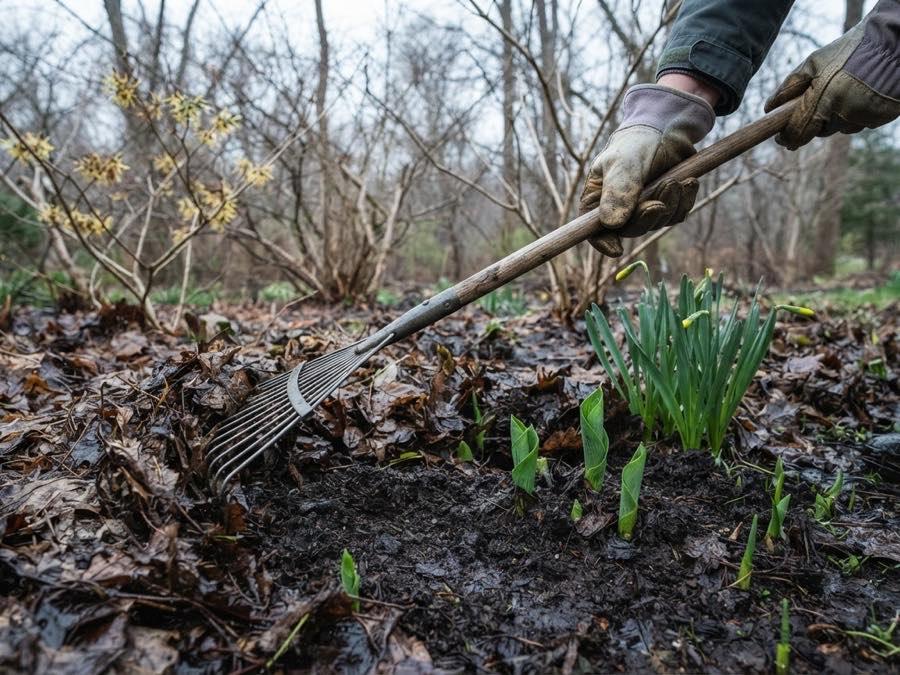
Branches, leaves that blew into beds over winter, sand and grit thrown up from the road. Use a leaf rake rather than a metal garden rake, and use it lightly. You are lifting debris off the surface, not scarifying the lawn.
This is also when you will find snow mould: matted grey or pink patches where snow sat longest. Do not panic and do not reseed yet. Fluff the matted grass gently so air gets in, and most of it recovers on its own within three weeks.
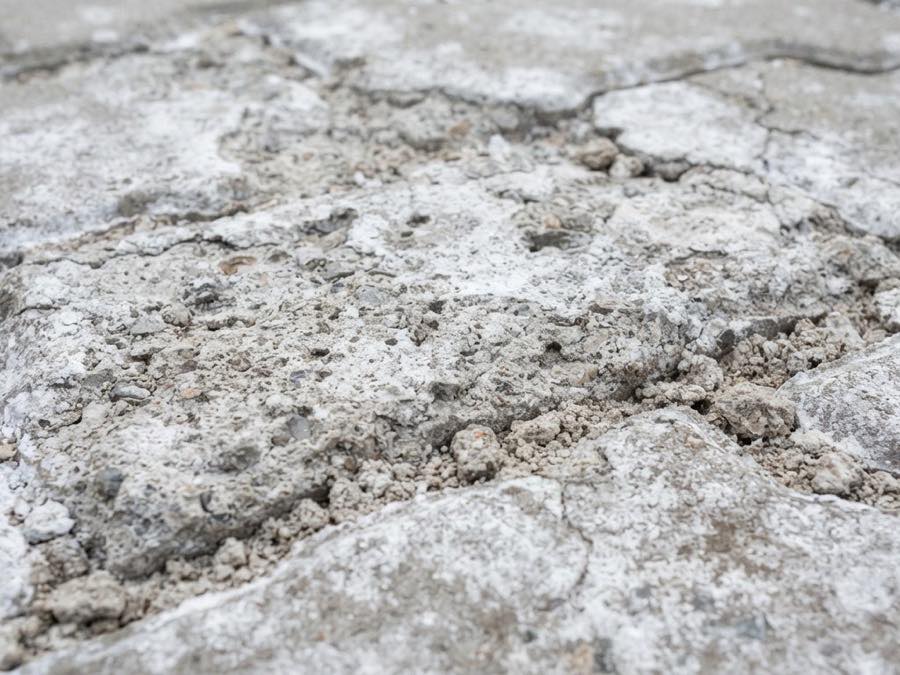
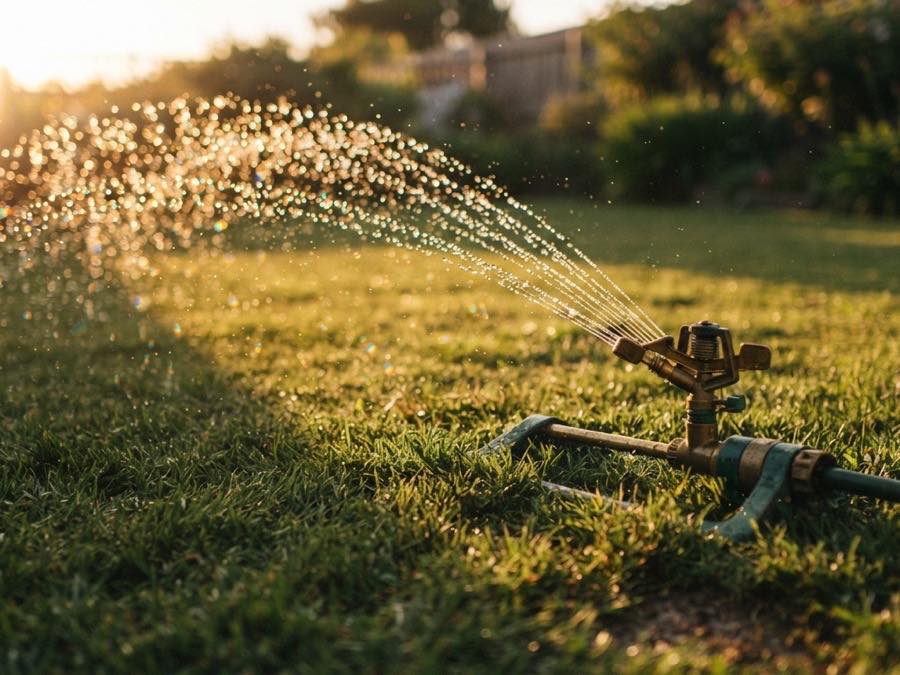
A dead strip one to two feet wide along the driveway or sidewalk is almost always road salt, not disease. Flush it with a long, heavy soak of water before you do anything else. If it has not greened by mid-May that strip needs reseeding, and it will need it again next spring unless the de-icer changes.
3. Cut the first time, high
The first cut takes the top only, no more than a third of the blade height, with the mower on its highest setting. Grass is running on stored energy in early spring; cutting it short forces it to spend that reserve regrowing leaf instead of building roots.
Sharpen the blade first. A dull blade tears rather than cuts, and torn tips brown off within a day, which is why some lawns look scorched immediately after their first cut.
4. Edge and define the beds
Cut a fresh spade edge between lawn and garden beds before you mulch. A crisp edge is the single biggest visual difference between a maintained property and an unmaintained one, and it costs nothing but time.
5. Mulch, but not against the stems
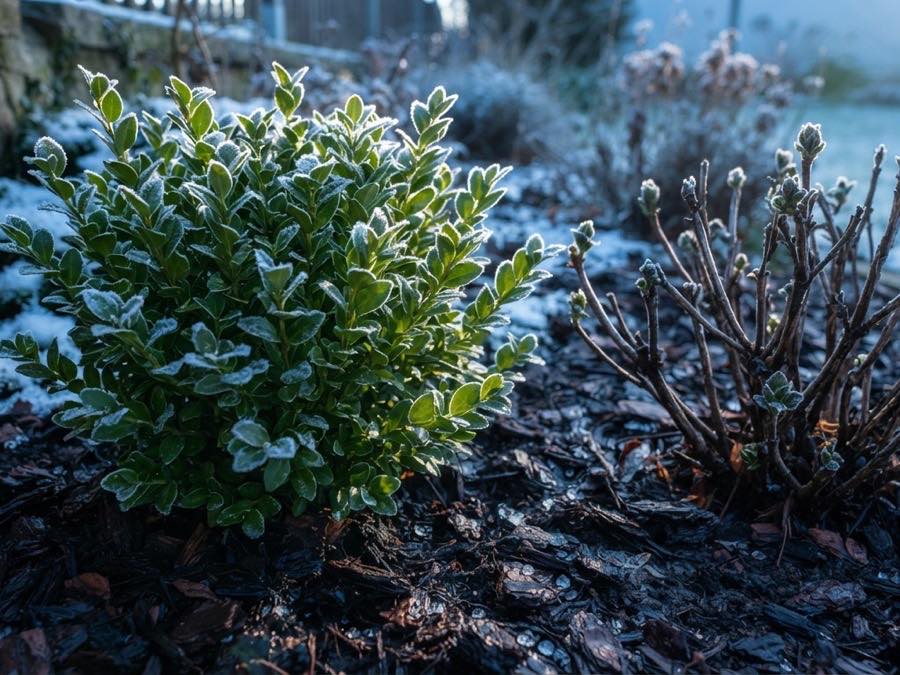
Two to three inches, pulled back an inch or two from every trunk and stem. Mulch piled against bark holds moisture there and rots it. That is what is killing the trees you see with a volcano of mulch around the base.
6. Feed, once the soil reaches 12 °C
This is the step most often done too early. Fertiliser on cold soil mostly feeds the weeds, which wake earlier than turf grass does, and a good share of the nitrogen simply washes into the storm system.
Soil temperature, not air temperature, is the trigger. A rough field test: when the lilacs and forsythia around Markham are properly in flower, the soil is warm enough.
7. Overseed thin areas, and keep them wet
Spring seeding is second best to fall seeding, because the new grass has to establish before summer heat arrives. If you are patching, do it now rather than in May, use a tall fescue or perennial rye blend suited to Ontario, and keep the seedbed damp for two to three weeks. Seed that dries out once is dead.
If you change one thing this spring, change the order: clear, cut high, edge, mulch, then feed. Feeding first is the most common and most expensive mistake.
What we skip, and why
- Spring aeration. It opens the soil right as crabgrass is germinating. Aerate in September instead.
- Dethatching a healthy lawn. Thatch under half an inch is beneficial. Ripping it out because it is spring is damage without a cause.
- Pre-emergent everywhere by default. It stops grass seed germinating too, so it cannot be combined with overseeding. Pick one.
Rather not do it yourself?
Spring cleanups book out fast in Markham. We handle the whole sequence in one visit, in the right order.