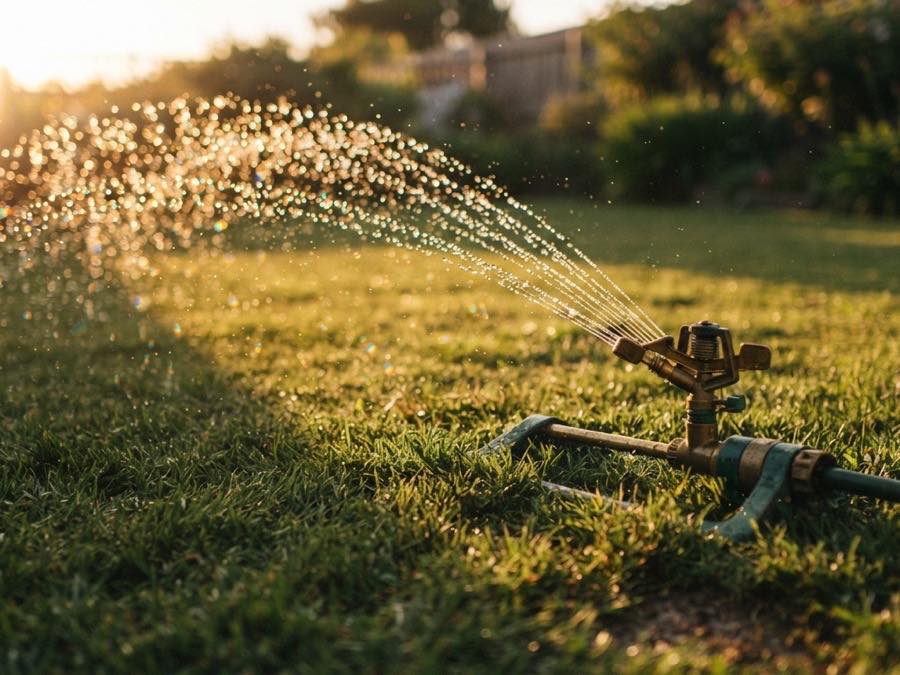
The most common watering habit we see in Markham is a sprinkler on a timer, fifteen minutes a night, every night. It feels diligent. It produces the weakest possible lawn.
The number that matters
A cool-season lawn in southern Ontario wants roughly 25 mm of water per week, rain included, through the growing season. That is the whole target. The question is only whether it arrives in one visit or seven.
Fifteen minutes of a typical oscillating sprinkler puts down about 4 mm. Seven nights of that is 28 mm, which looks correct on paper. But almost none of it reaches the root zone, because 4 mm wets roughly the top 15 mm of soil, and on a warm day most of that evaporates before morning.
The grass responds rationally: it keeps its roots where the water is, in the top centimetre or two. Then the first genuinely hot, dry week arrives, that thin layer dries out in an afternoon, and the lawn browns while the homeowner is watering every single day.
Roots grow toward water. Shallow watering trains shallow roots, and shallow roots are what fail in August.
What to do instead
Two soakings a week, about 12 mm each. That gets water down 100 to 150 mm into the soil, which is where you want the roots to go. Between soakings the surface dries, which suppresses fungal disease, and the roots chase the moisture downward.
How to measure it without any equipment
Put three empty tuna tins on the lawn inside the sprinkler pattern. Run the sprinkler and time how long it takes to collect 12 mm. That is your run time, and it is the only calibration you will ever need. Most sprinklers land somewhere between 35 and 50 minutes.
You can also check afterwards by pushing a long screwdriver into the soil. It slides easily through wet soil and stops at dry. If it goes in 100 mm, you watered correctly.
Between 4 and 9 a.m. is best. Less evaporation than midday, and the blades dry as the sun comes up. Evening watering leaves grass wet for eight or ten hours overnight, which is how you invite dollar spot and brown patch.
Rain counts, so subtract it
A 15 mm rainfall covers most of one soaking. A rain gauge costs a few dollars and prevents the most wasteful habit of all, which is running an irrigation system on schedule through a wet week. If your system has a rain sensor, test it every spring; they fail quietly.
Letting it go dormant is a legitimate choice
Kentucky bluegrass is built to go dormant in drought. It browns off, stops growing, and waits. It is not dead, and a healthy established lawn survives four to six weeks that way without harm.
What you must not do is water it a little bit while it is dormant. Waking the crowns up and then letting them dry again is far harder on the plant than leaving it dormant throughout. Commit to one or the other: keep it green with proper soakings, or let it sleep and water deeply once every three weeks purely to keep the crowns alive.
New sod and new seed are the exception
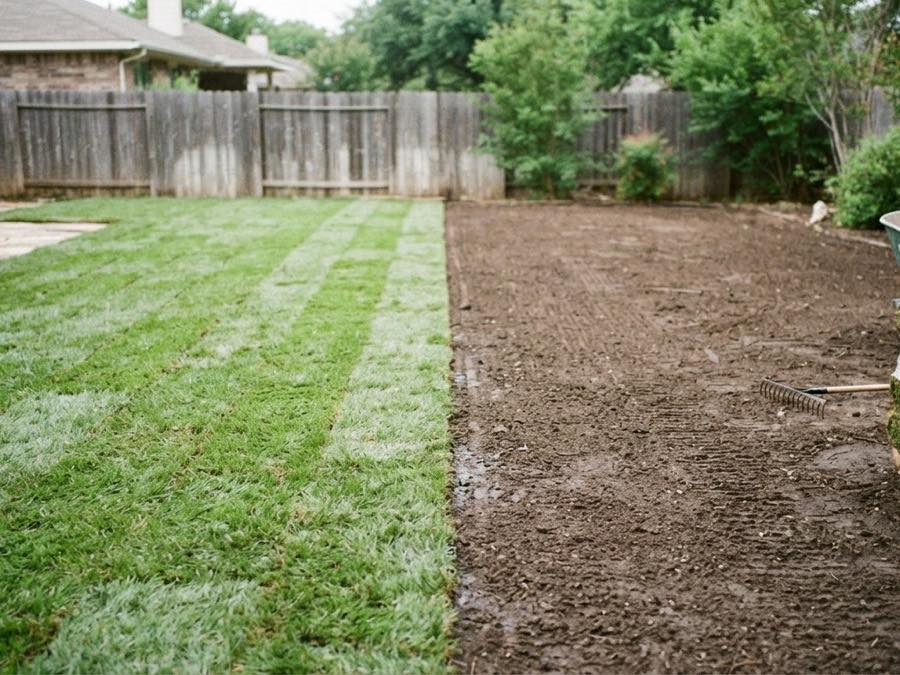
Everything above applies to an established lawn. New sod needs water daily, sometimes twice daily, for the first two weeks, because its roots have not knitted into the soil yet. New seed needs the surface kept damp until germination. In both cases you switch to the deep-and-infrequent schedule only once the lawn is established.
Want it handled on a schedule?
Our maintenance plans include irrigation startup, seasonal adjustment and fall blowout, so the timing is never guesswork.