Almost every interlock repair we quote in spring traces back to the same cause, and it is not the freeze. It is what got thrown down to fight the freeze.
What salt actually does to concrete pavers
Sodium chloride does not dissolve stone. The damage is mechanical, and it arrives two ways.
The first is freeze-thaw cycling. Salt lowers the freezing point of water, which is the entire point of using it. But a salted driveway does not simply stay unfrozen all winter. It hovers around the transition, thawing in afternoon sun and refreezing overnight. Water sits in the pores of the paver, freezes, expands about nine percent, and pushes outward. An untreated surface that stays frozen solid from December to March goes through that cycle a handful of times. A salted one can go through it fifty times in a season.
The second is crystallisation pressure. Brine soaks into the paver, the water evaporates, and salt crystals grow inside the pores. Those crystals exert real force from within, which is why the damage usually shows up as flaking rather than cracking.
The three things to look for
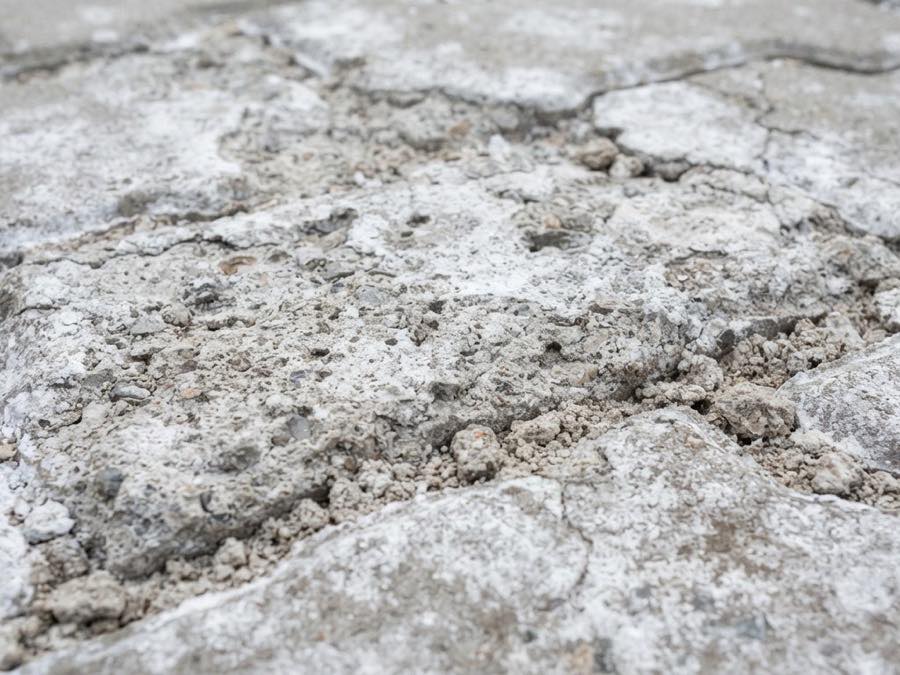
- Spalling. The top few millimetres flake away, leaving a rough, pitted face with the aggregate showing. Once that dense surface layer is gone the paver absorbs water faster and the damage accelerates.
- Efflorescence. A chalky white bloom on the surface. On its own it is cosmetic and often weathers off, but persistent efflorescence means water is moving through the paver, which is exactly the condition spalling needs.
- Joint washout. Brine and meltwater flush polymeric sand out of the joints. Empty joints let pavers shift, shifting lets more water in, and more water opens the joints further. This one compounds fastest.
Most paver manufacturers void the surface warranty where de-icing salts have been used, particularly through the first winter while the concrete is still curing. Worth reading your paperwork before you reach for the bag.
What we use instead
On stone we use a calcium chloride and magnesium chloride blend. It costs roughly three times what rock salt costs per bag, and we still use less of it, because it stays effective down to about −25 °C where sodium chloride gives up around −9 °C. Below that, rock salt is just grit sitting on your patio waiting to scratch it.
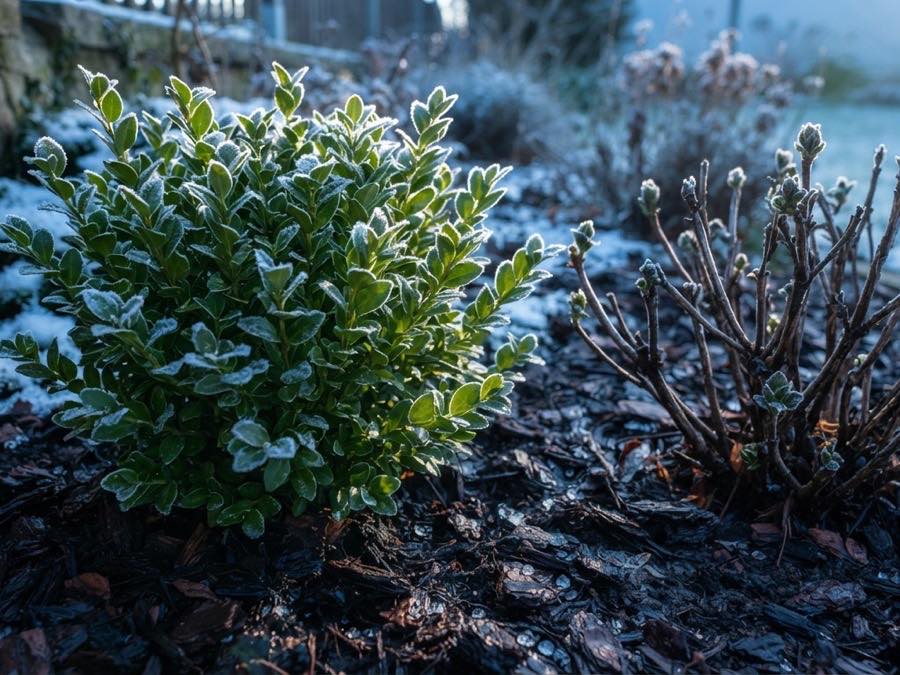
Just as important is how it goes down. On interlock we apply by hand rather than with a broadcast spreader. A spreader is built for speed on asphalt, and it throws product into planting beds and lawn edges. That is where the dead strip along the driveway comes from every April.
The order that actually matters
- Clear first, always. De-icer is for the thin bonded layer left after ploughing and shovelling, not for melting ten centimetres of snow. Salt spread over deep snow does almost nothing except end up in your garden.
- Apply thinly. The instinct is to lay it on heavily. Grains scattered a few centimetres apart is enough, because each one melts outward into a spreading patch.
- Sweep up the residue in spring. Leftover product sitting on the surface through the first warm rain is what drives efflorescence.
If you would rather skip chemicals entirely
Coarse sand or fine gravel gives traction with no chemistry at all. It melts nothing, so it only works if the surface is properly cleared first, and it needs sweeping in spring. On a short walkway where the real risk is someone slipping rather than the ice itself, that is a perfectly sensible choice.
What we would avoid outright: fertiliser as a de-icer. It circulates online every winter, it damages concrete about as much as salt does, and the nitrogen runs straight into the storm drains.
Our winter contracts use the right de-icer
Every Summit snow contract uses a calcium-magnesium blend on stone, applied by hand rather than by broadcast spreader.